
This story was also published in the CSR 2023-2024 report, released Nov. 5, 2024.
"Grazing is not easy."
From small scale to quality
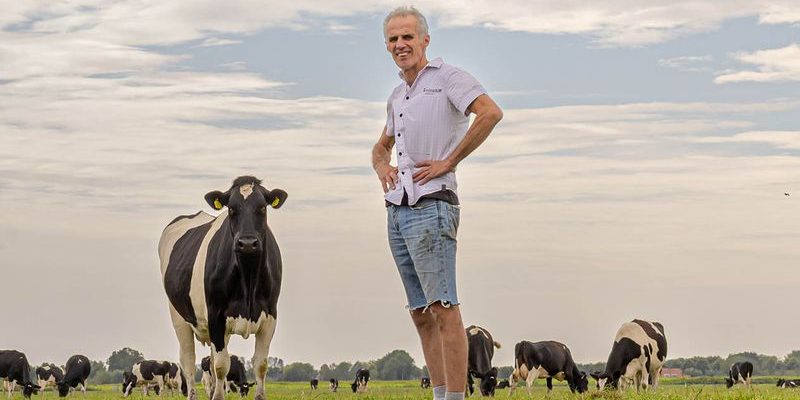
CONO dairy farmers Peter Konijn and Lieneke Bark, born and raised in the Beemster, run their closed dairy farm (no supply of dairy cattle) from Arenberg farm (built in 1800) in the Beemster polder. Their farm scores above average on the Caring Dairy criteria for animal health. Peter and Lieneke have 125 Friesian-Dutch cattle, a dual-purpose breed, which give a little less milk and have a little more meat on their bones. But the composition of that milk is high quality. "With the fat and protein content, we are on average a little more than three cents a year above the factory price," Peter says. "It's grown that way. We started small, during the milk quota. So back then you had to earn it at the bottom. Gradually we started expanding that. Now our bulls go abroad. To Ireland, for example, where they also have a lot of grassland."
180 to 190 grazing days
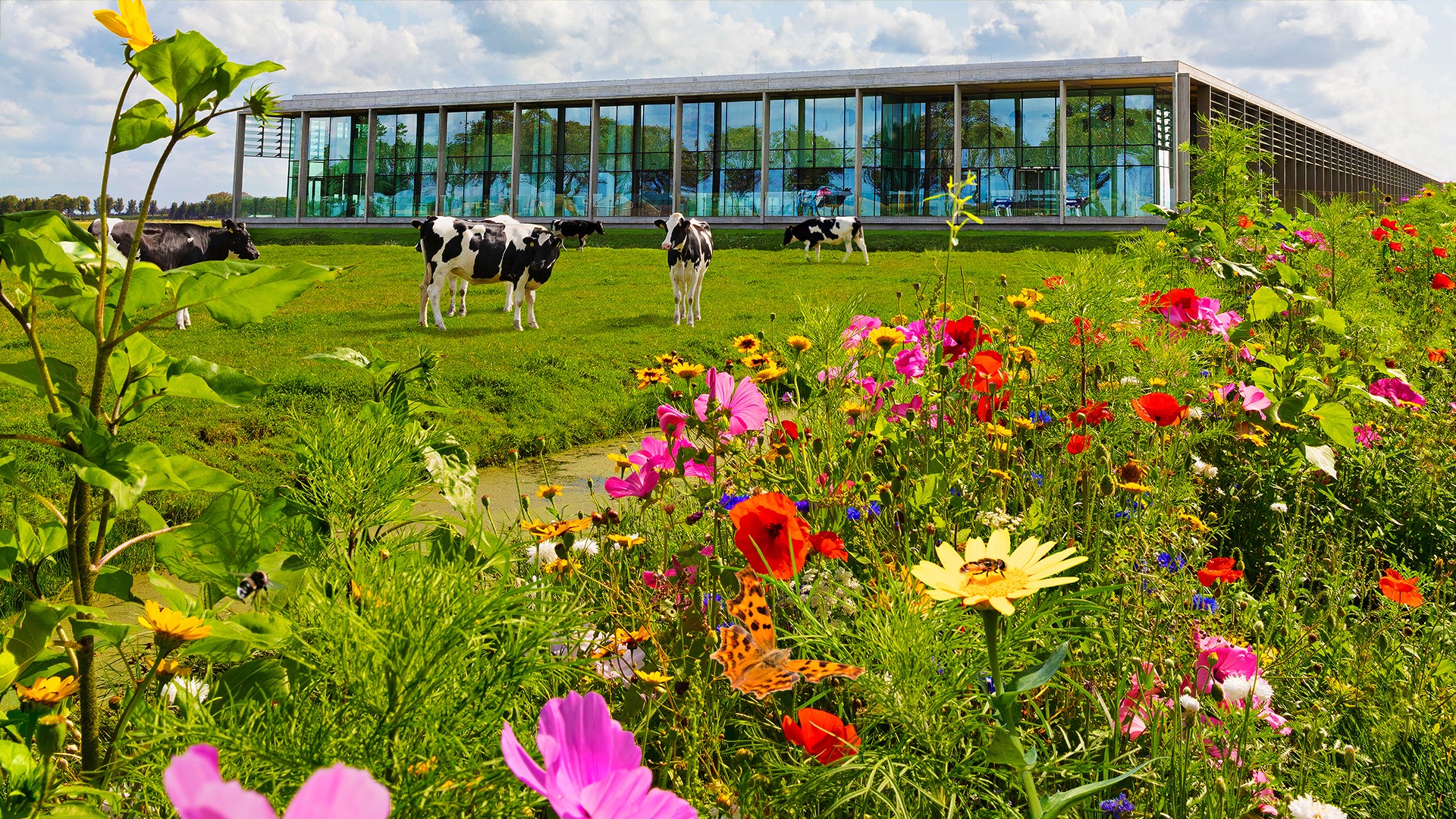
The farm is a "totally closed farm. "We sometimes use some semen from bulls from grass farms, to see if we can do even better, but that's about it. And we have enough land to deposit our own manure. "But the most important thing for us is that the cows do very well on a grass ration." For that grass ration, of course, the animals have to go out to pasture. Peter: "In the spring, the dairy cows first go outside during the day and as soon as possible also at night. They can handle that. And then outside is also outside," is our maxim. "They don't go back inside immediately after a day of bad weather. We get at least 180 to 190 grazing days. When the 'r' is in the month, they go back inside depending on the weather and the carrying capacity of the land. And they also know: there is no feed ready inside. Yesterday I went to get them at about four o'clock, and then they were still at the very back."
Grazing is not easy
"We also enjoy seeing those animals happy," says Lieneke. The grazing behavior "is in the breeding," but the animals also have to learn grazing. Lieneke: "When they are three and a half months old, the youngest stuff goes outside already. They still stay inside the fences then, and there are no cows or pinks with them." Grazing comes naturally, because fresh grass is just delicious and they don't get anything else when they are in the pasture. "You also have to keep it interesting for them," says Lieneke, "so you let them graze on plot A during the day, for example, and on plot B at night. We graze our cows, many others let them walk outside." "Grazing is not easy." Peter says it a few times during the conversation. But you can hear from everything: Lieneke and he like nothing better. "The most important thing for us is that our cows do very well on a grass ration."
Sheep with golden hoofs
In addition to the dairy cattle, Peter and Lieneke keep a flock of about 140 sheep, recently depleted by bluetongue, to keep the 50 acres of their own old grassland in condition in the fall and winter. "Sheep have 'golden hoofs,' they do say, but your land has to allow it. In February they go back in and in the spring everything is new grass."